



Here’s a summary of what we discussed plus more!
This material is adapted from Gala Russ’s Write Your Book class.
Point 1. A scene must change something
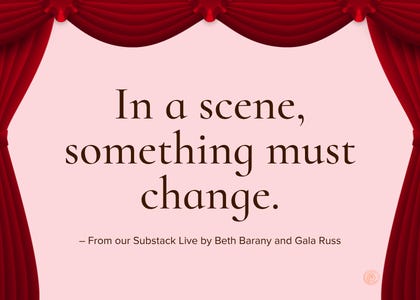
Most writers think a scene is “something happening.” I think of it as “something changing.”
Every scene is a before and after. If the reader can’t point to the difference, the scene isn’t doing its job.
What is the before? What is the scene question/goal?
What is the after? What’s different by the last line?
If nothing shifts, you can:
Eliminate that scene
Add a clear change
Combine with other scenes
Action for the writer
Analyze your scene: before and after.
Point 2. Every strong scene follows a cause-and-effect chain (Scene–Sequel Model)
Scene (external action):
Goal → what the character wants right now
Conflict → what’s in the way
Disaster → things don’t go as planned
Sequel (internal processing):
Reaction → emotional response
Dilemma → now what?
Decision → what they choose next
This creates a clean chain: action → consequence → meaning → next action.
Most writers skip the sequel—or rush it—and that’s why scenes feel either:
flat (no emotional weight)
or chaotic (no clear progression)
If your scenes feel disconnected, it could be because the decision at the end isn’t clearly driving the next goal.
Action for the writer
Analyze your scene: Is there an action and consequence?
Point 3. Strong scenes don’t resolve but escalate
An easy way to test escalation is to see if you can show if the character reached their goal by the end of the scene.
Use:
Yes, but… (success with a cost)
No, and… (failure that makes things worse)
This keeps:
Tension alive
Stakes rising
Readers turning pages
Scenes endings that keep the tension alive, stakes rising, and keep readers turning pages don’t resolve problems but make better, more complicated ones.
Action for the writer
Analyze scene ending for “Yes, but…” or “No, and…”
Connect with Gala Russ
Author • Book Coach • Publishing Strategist
Founder, Writing Conversations
Subscribe here and get notified about Gala’s monthly AMAs.
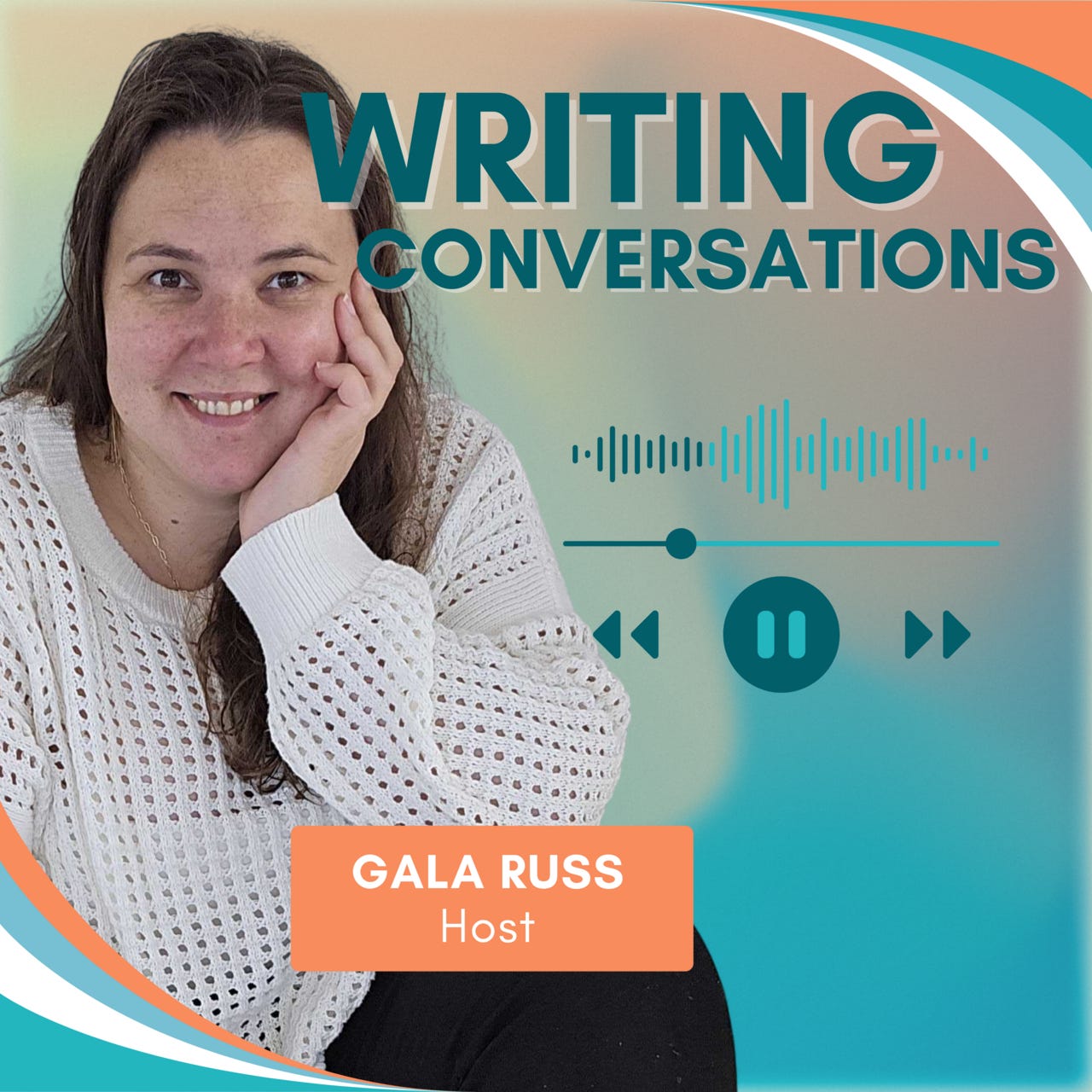
Gala helps creatives write their novels and build sustainable, values-aligned creative lives.
Email: galarussauthor@gmail.com
Location: California, USA (Pacific Time Zone)
www.galarussauthor.com
Subscribe to get notified for our weekly Lives.
Beth Barany supports science fiction and fantasy writers in her member Edit Your Future membership. $5. Start with her free Edit Your Novel Checklist.


